
A car that spends its life in Fort Lauderdale ages in ways that would surprise a driver coming from a more temperate part of the country. It is not just the salt air drifting in from the Atlantic, and it is not just the relentless South Florida sun beating down nearly every day of the year. It is the combination of both, working on different parts of a vehicle simultaneously, that gives Fort Lauderdale cars a distinctive wear pattern affecting rubber seals, exterior paint, and undercarriage components all at once.
Why South Florida’s Sun Is Uniquely Hard On Rubber
Ultraviolet exposure breaks down rubber compounds over time, causing the kind of drying, cracking, and eventual failure that shows up in weatherstripping, door seals, and hoses. Fort Lauderdale’s near constant sunshine, combined with intense UV levels typical of this latitude, accelerates this breakdown considerably faster than a car would experience in a climate with more overcast days and less direct sun exposure throughout the year.
Door and window seals often show the earliest signs of this UV damage, becoming stiff and losing their ability to form a tight seal, which can lead to water intrusion during Florida’s frequent heavy rain showers. Rubber hoses under the hood face similar degradation, developing surface cracking that increases the risk of a sudden failure, particularly once a hose has spent several South Florida summers baking under the hood in combination with engine heat.
How Sun And Heat Together Attack Your Paint And Interior
Beyond rubber components, sustained UV exposure fades and eventually damages exterior paint, particularly on vehicles that spend significant time parked outdoors without any shade. Clear coat can become dull or begin to peel after years of this exposure, and darker colored vehicles absorb even more heat, accelerating the process further. Interior materials suffer as well, with dashboards and seats fading, cracking, or becoming brittle from the combination of direct sun exposure and the intense heat that builds up inside a closed vehicle parked in direct Florida sunlight.
This heat buildup inside a parked car is genuinely extreme, often reaching temperatures well beyond the outside air temperature within just a few minutes, which is part of why interior materials in Fort Lauderdale vehicles tend to show wear considerably sooner than the same materials would in a car parked in a milder, less sun intense climate.
Why Salt Air Adds A Separate Threat To The Undercarriage
While sun and UV exposure work on the vehicle’s exterior and interior surfaces, salt air carried in from the Atlantic targets a different area entirely, the undercarriage. Fort Lauderdale’s proximity to the coast means salt particles settle on frame rails, brake lines, exhaust components, and suspension parts, and South Florida’s humidity ensures this salt residue stays damp far longer than it would in a drier climate, giving corrosion extended time to develop.
Brake lines deserve particular attention here, since these steel components carry fluid under pressure, and corrosion that develops gradually over years of salt exposure can eventually weaken them enough to cause a real safety concern rather than just a cosmetic issue. Vehicles that spend significant time parked near the Intracoastal Waterway or the beach itself face an even more concentrated version of this exposure compared to those garaged further inland.
Signs These Combined Stresses Are Affecting Your Vehicle
A few warning signs suggest Fort Lauderdale’s climate is taking its toll. Door or window seals that feel stiff or brittle, visible cracking on rubber hoses under the hood, fading or peeling paint, a dashboard that has developed cracks, or a spongy brake pedal that might indicate undercarriage corrosion are all worth having checked. If you have experienced starting trouble that seems tied to corroded connections, our guide on the top 10 reasons your car won’t start and how to get back on the road covers a range of causes, several of which can be traced back to the kind of combined sun and salt exposure common throughout South Florida.
It is worth noting that these two forms of damage often progress at different visible rates, which can lead drivers to underestimate one while focusing entirely on the other. A car with obviously faded paint might still have a perfectly sound undercarriage, while a vehicle that looks freshly detailed on the outside could already have meaningful corrosion developing underneath where it is never seen during a casual inspection. Treating both as separate, ongoing concerns rather than assuming one implies the condition of the other gives a more accurate picture of your vehicle’s true condition.
Habits That Help Slow Both Forms Of Damage
Parking in shade or under cover whenever possible reduces UV exposure to paint, seals, and interior materials, and even a simple carport can meaningfully extend the life of these components compared to a vehicle left in direct sun every day. Applying a UV protectant to rubber seals and trim periodically helps maintain flexibility and slow the cracking process that constant sun exposure otherwise accelerates.
A sunshade for the windshield, while a small and inexpensive accessory, makes a noticeable difference in reducing interior heat buildup and the resulting dashboard and upholstery damage that comes with it. This is especially worth using consistently for anyone who regularly parks outdoors for extended periods during the day, since the difference in interior temperature between a shaded and unshaded windshield can be substantial during a typical Fort Lauderdale afternoon.
Washing your vehicle regularly, including a deliberate rinse of the undercarriage, addresses the separate salt related threat by removing accumulated residue before it has extended time to sit and cause corrosion. Applying a rust inhibiting treatment to exposed undercarriage components on a regular schedule adds meaningful protection specifically against the salt air challenge that sun protection alone would not address.
Why A Mobile Mechanic Fits Fort Lauderdale’s Climate Reality
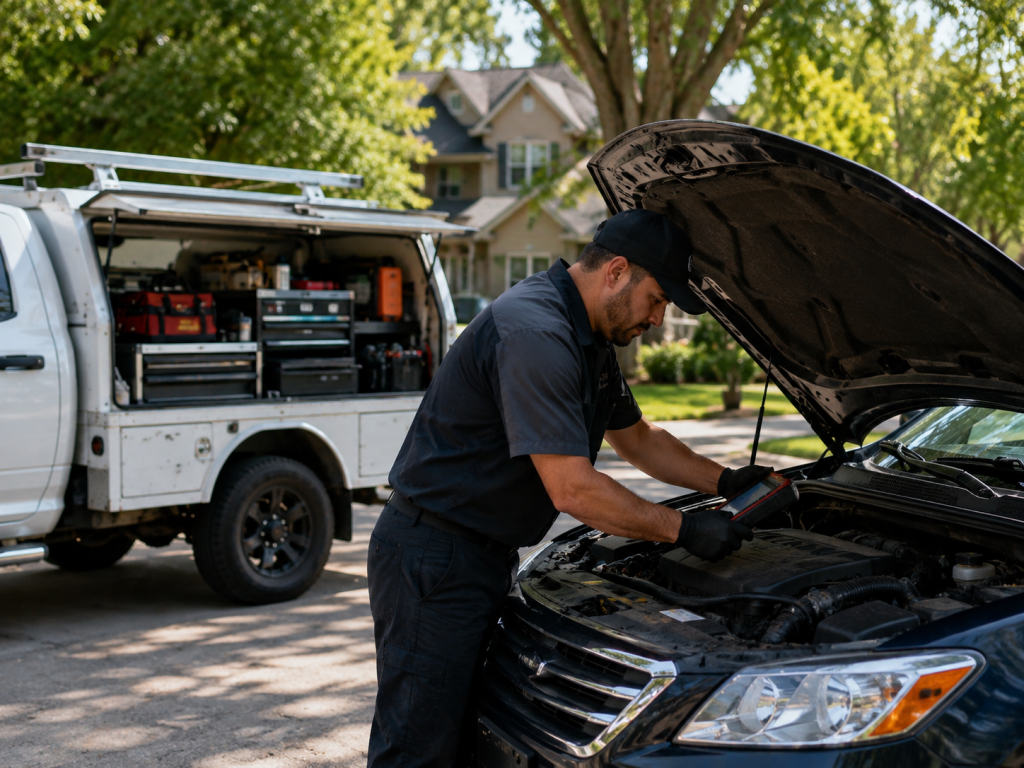
Given how these two separate stresses, sun and salt, affect different parts of a vehicle simultaneously, having a technician familiar with South Florida conditions come directly to your home or workplace offers a real advantage. A mobile mechanic can inspect seals, hoses, paint condition, and undercarriage components together in one visit, addressing the full range of wear that Fort Lauderdale’s climate causes rather than treating each system in isolation.
We covered the broader benefits of this approach in our article on why mobile mechanics are better than traditional auto shops in Fort Lauderdale, which explains how convenience and local familiarity come together, particularly useful for the kind of comprehensive maintenance this climate genuinely requires.
Protect Your Vehicle From Both Sides Of South Florida’s Climate
Fort Lauderdale’s sun and salt air are both simply part of life here, and while neither can be avoided entirely, staying ahead of how they combine against your vehicle is well within your control. Catching UV damage to seals and paint early, alongside routine undercarriage inspections for salt related corrosion, can add years to the life of components that would otherwise wear out well before their time in this environment.
If it has been a while since your vehicle had a thorough inspection, visit our homepage to learn more about our services, or reach out through our contact us page to schedule a visit wherever your vehicle happens to be parked in the Fort Lauderdale area.
A little proactive care now goes a long way toward keeping your car dependable despite everything South Florida’s sun and salt throw at it throughout the year.